Smart Inventory Management: Reduce Waste
Inventory management, which constitutes a significant part of costs in restaurants, can lead to major losses if not done correctly.
What is Waste and Why is it Important?
Waste is inventory lost without being used or sold. It can occur due to spoilage, errors, theft, or waste.
Statistics:
- Average restaurant waste rate is between 2-5%
- In well-managed restaurants it can drop below 1%
- In poor management it can exceed 10%
Waste Reduction Strategies
1. Digital Inventory Tracking
Use digital system instead of manual counting:
- Real-time inventory status
- Automatic alerts
- Movement history
- Supplier tracking
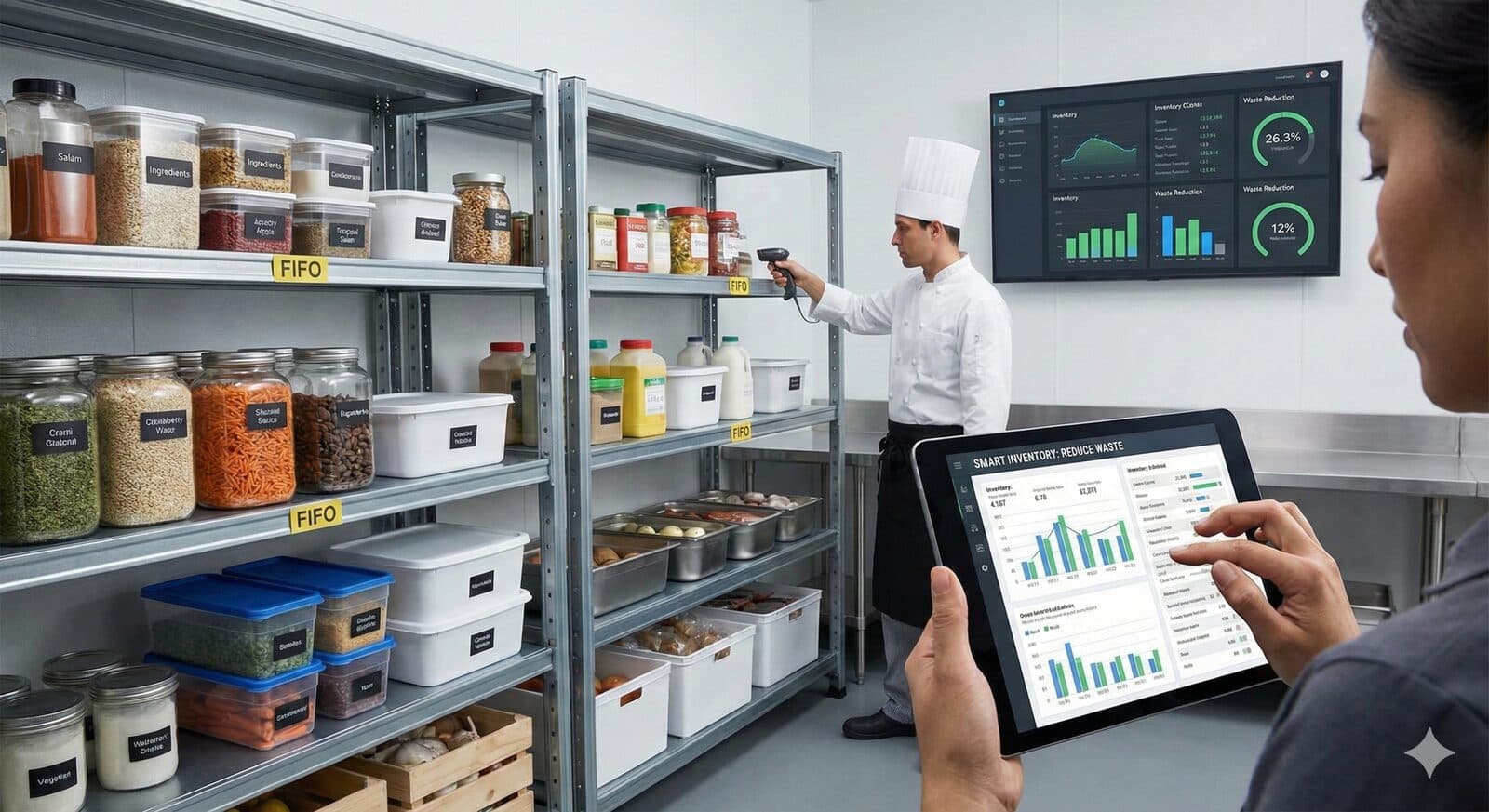
2. FIFO Principle
First In, First Out:
- Old stocks should be used first
- Shelf organization is important
- Staff training is necessary
3. Portion Control
Standard recipes and portions:
- Clear portion for each dish
- Scales and measuring tools
- Kitchen staff training
4. Right Order Quantity
Don't keep excess inventory:
- Analyze past sales data
- Consider seasonal changes
- Know supplier delivery times
5. Storage Conditions
Proper storage is critical:
- Maintain cold chain
- Humidity control
- Ventilation
- Cleanliness
Technology Usage
Modern inventory management systems:
- Automatic Counting: Barcode reading
- Alerts: Products approaching expiration
- Analysis: Which products have more waste
- Integration: Automatic inventory reduction with POS
- Reporting: Detailed waste reports
Staff Training
As important as technical systems:
- Inventory management procedures
- Hygiene and storage rules
- Waste recording system
- Responsibility awareness
Measurement and Improvement
Waste Rate = (Waste Amount / Total Inventory Amount) x 100
- Track weekly waste rate
- Analyze by categories
- Set targets
- Continuously improve
Conclusion
Waste management directly affects profitability. With digital systems and proper procedures, you can significantly reduce your waste rate.